One Defensive Line, Two Ways to Hold It
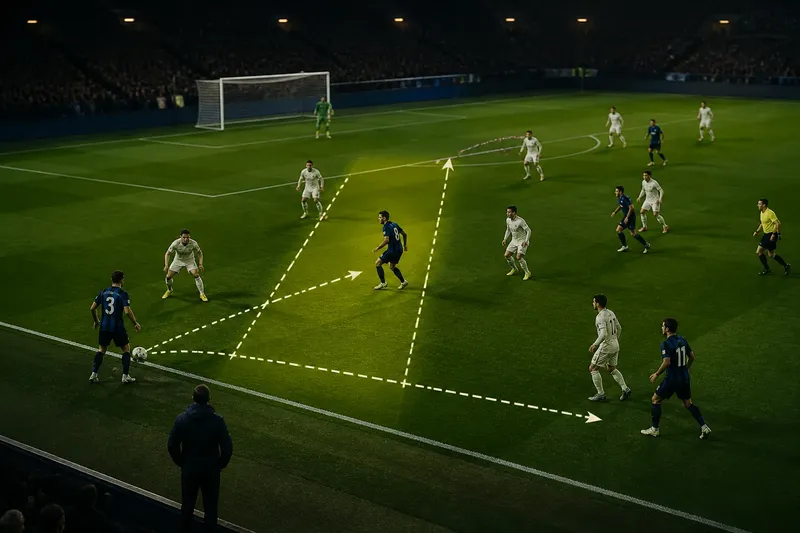
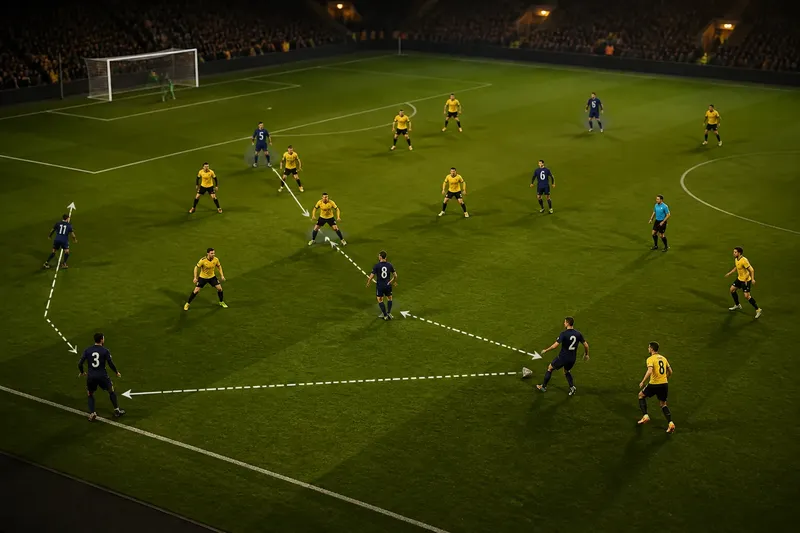
Compare a high defensive line with a deeper one to see how each trades space behind the defence for pressure near the ball and safer decisions.
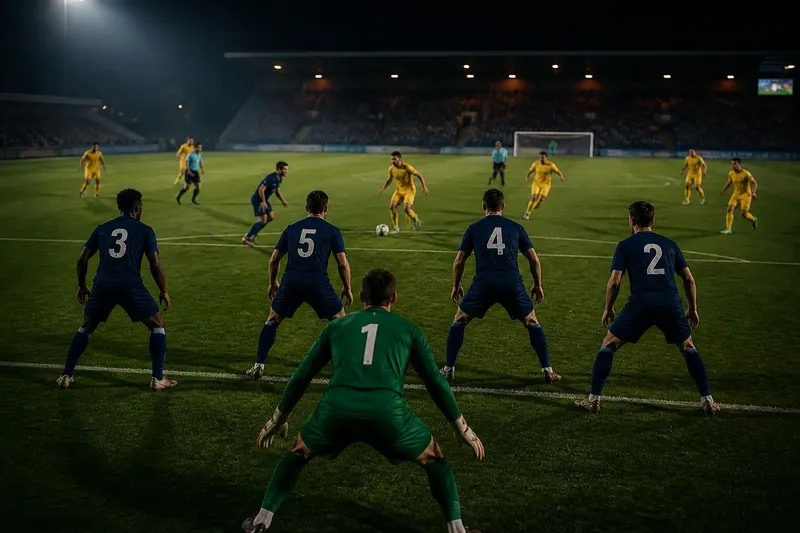
A high defensive line can squeeze a team around the ball; a deeper one can leave the opponent more room to play in front. That is the central trade-off in a high vs. low defensive line: move up to shorten the pitch, or retreat to protect the space behind. Neither choice is automatically brave or cautious. Each asks defenders, midfielders and the goalkeeper to solve a different problem together.
What changes when the line moves?
The defensive line is the rearmost row of outfield defenders when a team is out of possession. Its height is not a fixed mark on the grass. It shifts with the ball, the pressure on the passer, the position of teammates and the threat of an opponent running in behind.
When defenders step higher, the space between them and their goalkeeper grows, while the room available in front of them shrinks. The team can crowd the opponent’s build-up and make short passes feel hurried. But one clean pass or a mistimed step may expose the space behind.
When the line drops, defenders put more players between the ball and goal. That can make a direct run less dangerous and give the back line time to see the pass. The cost is often more space for opponents to receive, turn or combine in front of the defence.
Think of the line as a moving boundary, not a verdict on a team’s character. A side may defend high near the opponent’s penalty area, then retreat toward its own box as an attack develops. The useful question is not simply where the defenders stand, but whether that position matches the pressure and cover around them.
When does a high line help?
A high line is most useful when the team can put pressure on the ball. If a forward closes the centre-back and a midfielder blocks the easy pass, the player in possession may have little time to spot a runner or shape a long ball. Defenders can then hold their ground rather than turn and chase immediately.
That pressure also compresses the pitch. The gap between the forwards and defenders narrows, making it easier for teammates to contest loose passes and keep the opponent’s play in a crowded area. If possession is won, the recovering team may already be close enough to attack without building from deep.
The line depends on coordination. A fullback stepping out to challenge, for example, needs nearby teammates to recognise the movement and cover the channel left behind. If one defender holds while the others step, an opponent can exploit the uneven line with a run through the gap.
- Watch the passer: Is anyone close enough to disrupt a forward pass, or does the ball carrier have time to look up?
- Watch the goalkeeper: Is the goalkeeper positioned to deal with a ball played over the defence, rather than staying far from the action?
- Watch the defenders’ movement: Do they step together as the ball goes backward, or retreat separately while the opponent prepares to pass?
- Watch for a broken press: If the first line is bypassed, can the midfield slow the attack before it reaches the back four?
These cues matter more than a defender’s starting location by itself. A high line without pressure can invite a measured pass into space. A high line with active pressure can instead leave the passer choosing between a rushed ball and a short pass into traffic.
When is a deeper line the better choice?
A deeper line can make sense when the opponent has runners who threaten the space behind, or when the defending team cannot press the ball reliably. By retreating, defenders give themselves a clearer view of the runner and reduce the distance they must cover toward their own goal.
It may also suit a team protecting a narrow lead late in a match, especially if its players are tired or the opponent has committed attackers forward. The intention is to keep bodies close to goal and make the route through the penalty area difficult. That does not mean abandoning pressure: midfielders still need to close receivers, and defenders need to step toward the ball when the moment is right.
The danger is allowing the opponent to settle. If the line retreats while midfielders remain far away, an attacker may receive unchallenged, turn toward goal and choose a pass. The defending side can end up protecting the space behind while conceding time and room in front of the box.
Say a team’s centre-backs are facing a quick forward who repeatedly starts runs beyond them. The coach asks the back line to drop a few yards while the nearest midfielder closes the passer’s preferred route. The expected observable result is that the forward has less open space to sprint into, while the passer still encounters pressure rather than receiving an unopposed view of the field.
How should the line respond as the ball moves?
Good defending is rarely a choice between holding one height all match and abandoning it. The line can move in response to the ball’s location and the opponent’s ability to play forward. A pass backward may give defenders a cue to step up together; a receiver facing forward under little pressure may prompt them to retreat and protect the depth.
That movement needs to be readable across the unit. Centre-backs often organise the row because they can see both the ball and the forwards. Fullbacks must judge whether to stay level, step toward a wide attacker or cover a teammate moving inside. The goalkeeper can help by calling for a higher line or warning of a runner, but the defenders still need to act as one group.
Offside positioning can support a high line, but it is not a substitute for pressure or shared timing. If the ball carrier has time to choose a pass, defenders risk giving a runner a clean path to goal. If they step at different moments, the opponent may stay onside behind one defender even as the others move up.
A deeper line has its own timing problem. Defenders should not keep backing away simply because an opponent carries the ball forward. When a receiver takes a poor touch, faces away from goal or is forced toward the touchline, the line may be able to step and make the space compact again. The trigger is the opponent’s limited options, not a fixed number of paces.
What should you look for in a match?
To read a defensive line, follow the relationship between the ball, the nearest pressure and the defenders behind it. A freeze-frame of the back four may suggest a high or deep block, but the next pass reveals whether the shape is functioning. Does pressure arrive before the ball travels? Do midfielders close the receiving lanes? Does the goalkeeper adjust with the defence?
Try tracing one attack from its first forward pass. Note whether defenders step, drop or hold. Then watch what the opponent does with the space: a runner may attack behind, a midfielder may receive in front, or the ball may be forced sideways. This connects the line’s position to its practical effect, rather than treating height as a style label.
It is not worth counting every defender’s step or judging a line from a single still image. A few clear moments—a backward pass, a pressured long ball, or a forward receiving between the lines—usually tell you more than a complicated tally.
Which defensive line questions matter most?
Is a high defensive line always risky?
It carries a risk of space behind, but pressure on the ball and a goalkeeper positioned to sweep can reduce the opponent’s chance to exploit it. The danger rises when the passer has time and the defensive unit is not moving together.
Does a deep defensive line mean a team is passive?
No. A team can defend close to its own goal while still pressing receivers, blocking forward passes and challenging poor touches. Depth describes where the last line is positioned, not how actively every player defends.
Can a team switch line height during a match?
Yes. A team may press high after a goal kick, then retreat if the opponent plays through the first pressure. The switch works best when teammates recognise the same cue and move together.
What does the goalkeeper contribute to the defensive line?
The goalkeeper can cover space behind a high line and communicate about forward runs. With a deeper line, the goalkeeper may need to manage crosses and shots from closer range, so positioning and clear communication remain important.
What is the useful distinction?
When comparing a high vs. low defensive line, look at what the team is willing to concede. The higher line tries to deny comfortable possession near the ball, accepting more exposure behind. The deeper line prioritises protection of the goal-side space, accepting that the opponent may have time in front.
The best clue is the next decision after the ball moves. If defenders step up, someone must pressure the passer and cover the route behind. If they drop, someone must close the receiver and prevent a free turn. The line is not a wall on its own; its value comes from the space teammates choose to protect together.